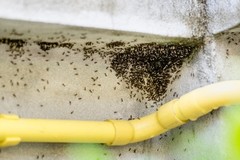
Finding a line of ants marching across your baseboard is annoying. Spotting a dark patch of mold on the same wall is worrying. But when you notice both at once, you may be looking at a clue rather than a coincidence. The pairing of ants and mold in the same area of a home very often points back to a single hidden culprit: unwanted moisture. If you have been dealing with either problem in your home, our team offers damage restoration services in Louisville and the nearby neighborhoods and understands how these two issues tend to travel together.
Understanding why pests and fungal growth overlap can help you catch a small problem before it becomes an expensive one. In this article, we will walk through the connection, the warning signs to watch for, and the practical steps that address the root cause instead of just the symptoms.
Why Moisture Attracts Both Problems
Mold and many household ants share the same basic requirement to thrive: water. Mold spores are always present in the air, but they only take hold and spread when they land on a surface that stays damp. Carpenter ants and other common indoor species are drawn to moisture for drinking and for softening the wood they nest in. When a spot in your home stays consistently wet, whether from a slow plumbing leak, a roof issue, or poor drainage, it creates a welcoming environment for both.
That is why ants and mold so frequently appear side by side. A leaking pipe behind a wall, condensation around a window, or water wicking up from a foundation can quietly feed both problems at the same time. The ants are not causing the mold and the mold is not summoning the ants. Instead, both are responding to the same underlying dampness. Recognizing this shared source is the key to solving the problem for good rather than treating each issue in isolation.
Carpenter Ants and Damaged Wood
Carpenter ants deserve special attention when they show up alongside mold. Unlike termites, they do not eat wood, but they do excavate tunnels in it to build their nests. They strongly prefer wood that has already been softened by moisture and decay, which is exactly the kind of wood that also supports mold growth. So when you see carpenter ants indoors, it often means there is water-damaged wood somewhere nearby, and where there is water-damaged wood, mold is rarely far behind.
This is one reason a pest sighting can be an early alarm for a bigger structural concern. If ants have found soft, damp framing or subflooring, that same material may be quietly harboring fungal growth inside a wall cavity or under a floor. Addressing only the ants with a spray treatment leaves the moisture and the mold behind, which means both problems are likely to return. The lasting fix involves finding and correcting the water source, then repairing or replacing the compromised materials.
Common Places Where Ants and Mold Overlap
In homes across Louisville and the surrounding areas, certain spots tend to gather moisture more than others, and those are the same places where you are most likely to find this combination. Kitchens and bathrooms lead the list because of their plumbing and steam. Basements and crawl spaces are close behind, since they sit low and often deal with humidity and groundwater. Window sills, exterior walls, and areas beneath appliances round out the usual suspects.
Paying attention to a few recurring signals can help you spot trouble early:
- A musty or earthy smell that lingers even after cleaning
- Discoloration, staining, or bubbling paint on walls or ceilings
- Wood that feels soft, spongy, or crumbles when pressed
- Persistent ant activity that keeps returning to the same spot
- Visible condensation around windows, pipes, or ductwork
When several of these appear together, it strongly suggests a moisture problem is feeding both the pests and the fungal growth. That is your cue to investigate the source rather than just wipe away the visible signs.
Why Surface Cleaning Is Not Enough
It is tempting to grab a bottle of cleaner, scrub the visible mold, and set out some ant bait. Those steps might make the problem look better for a few days, but they rarely resolve it. Mold that grows on a persistently damp surface will simply regrow once the cleaner dries. Ants that are nesting in wet wood will keep coming back to the food and moisture that drew them in the first place. The visible growth on a wall is often just a fraction of what has taken hold inside the structure.
Effective remediation starts with identifying and stopping the water intrusion. That could mean repairing a leak, improving drainage, sealing a foundation gap, or reducing indoor humidity. Only after the moisture is controlled does removing the mold and repairing the damaged materials produce a lasting result. Because mold can spread through wall cavities and release spores during removal, this work is best handled with proper containment and equipment. Our certified mold removal in Louisville, KY focuses on both the visible growth and the moisture conditions that allowed it to develop.
How Professional Restoration Breaks the Cycle
When ants and mold appear together, a professional approach treats them as connected symptoms of one moisture issue. The process usually begins with a thorough inspection, often using moisture meters and other tools to trace dampness back to its origin. From there, drying equipment removes the excess water, damaged materials are addressed, and the affected area is cleaned and restored. Correcting the moisture is what finally makes the space unappealing to both the ants and the mold.
Water intrusion is frequently the starting point for this whole chain of events, which is why fast response matters. A leak that dries quickly leaves little chance for mold to establish or for ants to move in. If you suspect a hidden leak or you have already seen standing water, our 24-hour emergency water damage restoration in Louisville can help stop the spread before it turns into a larger problem. For homeowners nearby, we also provide water damage restoration in Highview and neighboring communities.
Protecting Your Home Going Forward
Once the immediate issue is resolved, a few habits go a long way toward keeping both problems from coming back. Fix drips and leaks promptly, keep gutters and downspouts directing water away from the foundation, and use exhaust fans or a dehumidifier to manage humidity in bathrooms, kitchens, and basements. Periodically check the areas most prone to dampness, especially after heavy rain, so you can catch trouble while it is still small and inexpensive to correct.
The main takeaway is simple: when you see ants and mold in the same place, do not treat them as two separate nuisances. Read them as a signal that moisture is present and needs attention. Solving the water problem is what protects your home, your structure, and your air quality over the long run.
If you are noticing these warning signs in your home, do not wait for the damage to spread. Reach out to Purofirst Disaster Services for an assessment and a plan built around the real source of the problem. Our experienced team serves Louisville and the surrounding areas, and we are ready to help you break the cycle of ants and mold for good.