Insulation does a quiet job behind your walls, in your attic, and under your floors, and because it stays out of sight, it can hide a problem that grows for months before anyone notices. One of the most common questions homeowners ask us is simple but important: what does mold look like on insulation? Knowing the answer can help you catch a small issue before it spreads into your framing, drywall, and the air you breathe every day. If you suspect a hidden problem, our team offers emergency restoration services in Louisville and its neighboring communities and can assess the situation quickly.
Mold on insulation is not always obvious at first glance. Depending on the type of insulation, the moisture source, and how long the growth has been developing, it can appear in a range of colors and textures. In this guide, we will walk through what to look for, why insulation is so vulnerable, and what steps to take if you find something concerning in your home.
What Does Mold Look Like on Insulation
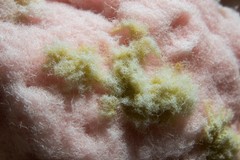
When people ask what does mold look like on insulation, they are usually expecting a single clear image, but the reality depends on several factors. On fiberglass insulation, mold often shows up as black, green, gray, or even white fuzzy patches scattered across the surface. These spots may look powdery or slightly furry, and they tend to cluster where moisture has collected. On the paper or kraft backing attached to fiberglass batts, mold can appear as dark staining that spreads in irregular blotches, since paper is an organic material that feeds mold growth readily.
Blown-in cellulose insulation is especially prone to trouble because it is made from recycled paper products. Mold on cellulose can look like darkened, matted clumps that have lost their loose, fluffy texture. Spray foam insulation is more resistant, but mold can still grow on dust and debris that settle on its surface, appearing as discoloration rather than deep penetration. Across all these materials, color alone is not a reliable way to identify the species, and what matters most is recognizing that any unusual staining, spotting, or fuzzy texture signals a moisture problem that needs attention.
Signs of Mold Beyond What You Can See
Visual clues are helpful, but mold on insulation frequently hides where you cannot easily inspect it. That is why smell is often the first warning. A musty, earthy, or damp odor in your attic, basement, or crawl space usually means mold is active somewhere nearby, even if the surface looks clean. If you notice that odor getting stronger after rain or during humid weather, moisture is likely reaching your insulation.
Other indirect signs include water stains on surrounding drywall or framing, insulation that appears compressed or sagging from absorbed moisture, and increased allergy-like symptoms among people in the home. Headaches, coughing, sneezing, and irritated eyes that improve when you leave the house can point to poor indoor air quality tied to hidden mold. Because insulation sits in areas prone to leaks and condensation, these clues are worth taking seriously even before you confirm what does mold look like on insulation with your own eyes.
Why Insulation Is So Vulnerable to Mold
Mold needs three things to thrive: moisture, organic material, and a comfortable temperature. Insulation often provides all three. Attics and crawl spaces trap humidity, roof leaks drip directly into insulated cavities, and plumbing lines running through walls can leak slowly for weeks. Add in the organic paper backing or cellulose fibers, and you have an ideal environment for colonies to form.
Condensation is another frequent culprit in Louisville and nearby communities, where humid summers and temperature swings create the perfect conditions for moisture to accumulate inside walls and attics. When warm, moist indoor air meets cooler surfaces, water droplets form and soak into whatever is nearby. Over time, that repeated dampness gives mold everything it needs. This is also why mold and water damage so often go hand in hand, and why addressing leaks promptly matters. If you have experienced a recent leak or flood, our 24-hour emergency water damage restoration in Louisville can help stop the moisture that feeds mold before it takes hold.
Where to Check for Mold on Insulation
If you want to inspect your home, focus on the areas where moisture is most likely to reach insulation. A careful look in these spots can tell you a lot:
- Attics near roof penetrations, vents, and chimneys where leaks commonly start
- Basements and crawl spaces where humidity and ground moisture collect
- Exterior walls behind plumbing fixtures, especially under kitchens and bathrooms
- Around windows and in corners where condensation tends to form
When you inspect, use a flashlight and look for discoloration, staining on the paper backing, and any fuzzy or clumped texture in the insulation fibers. Pay attention to the surrounding wood and drywall too, since mold rarely stays confined to one material. If you find visible growth, avoid disturbing it, because handling moldy insulation can release spores into the air and spread the problem to other rooms.
What to Do When You Find Mold on Insulation
Discovering mold on your insulation can feel overwhelming, but the right response makes a real difference. First, resist the urge to pull out the affected insulation yourself. Disturbing it releases spores and can worsen indoor air quality, and without fixing the underlying moisture source, new growth will simply return. Instead, identify and stop the water intrusion, whether that is a roof leak, a plumbing problem, or excess humidity.
Contaminated insulation almost always needs to be removed and replaced rather than cleaned, because its porous structure allows mold to penetrate deep into the material. Professional assessment matters here. A trained technician can determine how far the growth has spread, test the surrounding structure, and contain the work area so spores do not travel through your home. Our specialists handle certified mold removal in Louisville, KY with proper containment, removal, and verification so the problem is resolved rather than hidden. When mold ties back to a water event, we also provide water damage restoration in areas like Prospect to address the source and the damage together.
Knowing what does mold look like on insulation gives you a valuable head start, but confirming and safely resolving it is a job best left to professionals. The quicker you act, the less likely mold is to spread into framing, ductwork, and living spaces, and the more you protect both your home's value and your family's health.
If you have spotted the warning signs we described or simply want peace of mind after a leak or humid season, reach out for a professional evaluation. Our team provides thorough mold removal and remediation in Louisville, KY and the surrounding areas, helping homeowners catch problems early and restore healthy indoor environments. Contact us to schedule an assessment and get clear answers about what is happening behind your walls.